

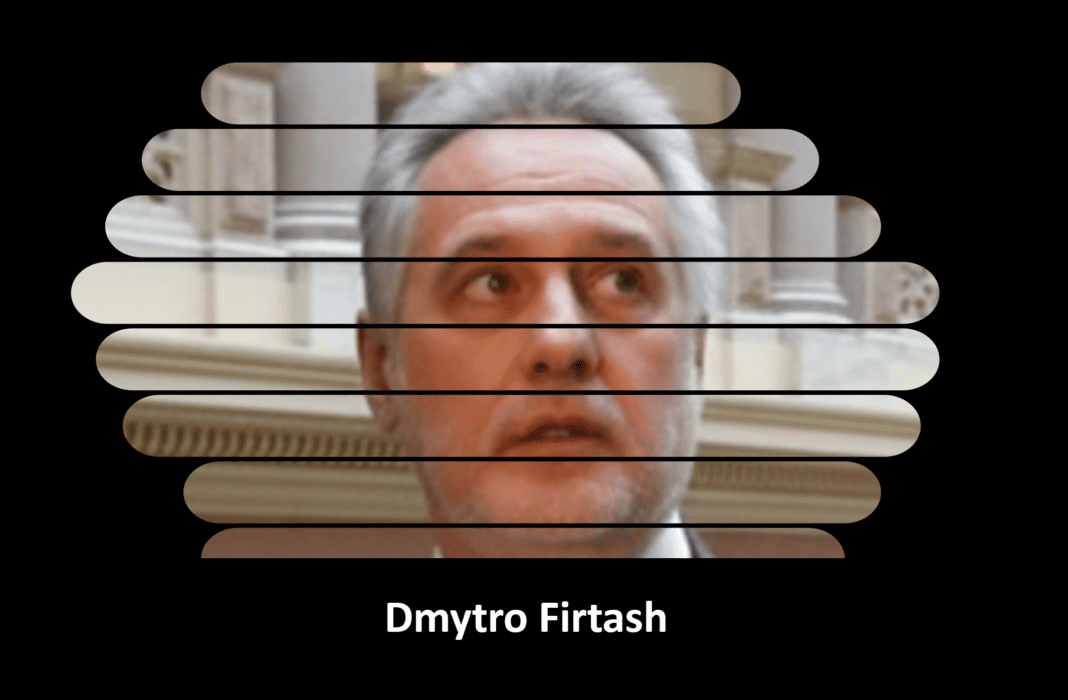

Austria’s Vienna Higher Regional Court has issued a final decision blocking the extradition of Ukrainian oligarch Dmytro Firtash to the US, closing a years‑long battle over a U.S. bribery case and related Ukrainian allegations. The ruling confirms that a 2024 lower‑court decision refusing extradition is not appealable, effectively ending U.S. efforts to bring Firtash to trial in Chicago.
Latest Austrian court decision
The Vienna Higher Regional Court dismissed the Vienna prosecutor’s appeal against a November 4, 2024, ruling that barred extradition, stating that the appeal was inadmissible and that the lower court’s decision is final. This means Austrian courts will not surrender Firtash to the U.S., even though he remains wanted by U.S. and Ukrainian authorities on serious financial‑crime allegations.
The decision comes after earlier Austrian proceedings in which courts had already refused parallel extradition requests, including from Spain, and scrutinised arguments about political motivation and alleged diplomatic immunity. Austrian authorities had detained Firtash in 2014 on a U.S. warrant and released him on a €125 million bail, but he has remained in Austria and fought every extradition step since.
Background: Firtash and his network
Dmytro Firtash built his fortune as an intermediary in the Russia–Ukraine gas trade, notably via RosUkrEnergo, which became the exclusive supplier of Russian gas to Ukraine in the mid‑2000s. His position in the gas sector and proximity to then‑President Viktor Yanukovych positioned him as a key node in the nexus between Ukrainian political power, Russian state‑linked energy interests, and offshore corporate structures.
Reports by European and U.S. media and officials have long highlighted allegations that Firtash operated through extensive offshore networks, including holdings in Cyprus and Austria, and that he had connections to Russian organised‑crime structures, which he denies. Western governments and Ukrainian anti‑corruption activists have repeatedly described him as a pro‑Kremlin influence actor in Ukraine’s energy sector, while he has framed the cases against him as politically driven.
U.S. charges: Indian titanium bribery scheme
A U.S. grand jury in Chicago indicted Firtash in 2013 in connection with an alleged scheme to bribe Indian officials to secure mining licences for a titanium project in Andhra Pradesh, India. Prosecutors allege that Firtash and several co‑conspirators agreed to pay at least 18.5 million dollars in bribes to Indian public officials to obtain licences for a $500 million titanium project, with output intended for sale to Western aerospace and industrial customers, including an unnamed U.S. company widely reported as Boeing.
The U.S. indictment includes multiple counts related to racketeering and violations of the Foreign Corrupt Practices Act and federal bribery statutes, and carries a theoretical exposure of up to 50 years’ imprisonment and extensive asset forfeiture. Firtash has consistently denied wrongdoing, arguing through counsel that U.S. authorities have not shown a sufficient nexus to U.S. commerce and that the case is politically motivated, particularly in the context of U.S.–Russia–Ukraine tensions.
Allegations and measures from Ukraine and the UK
Beyond the U.S. case, Ukrainian authorities and Western partners have pursued Firtash over alleged large‑scale embezzlement linked to Ukraine’s gas transit system. Ukrainian and U.S. authorities accuse him of involvement in schemes siphoning off nearly 500 million dollars in connection with gas‑related operations, though the precise procedural posture of Ukrainian proceedings has evolved with changes of government and wartime priorities.
Ukraine has imposed long‑term sanctions on Firtash, with President Volodymyr Zelensky extending restrictive measures against him for ten years in 2024, aligning Kyiv with broader Western efforts to target oligarchs seen as vehicles of Russian influence. In parallel, the UK in 2024 froze his assets, barred him from entry, and also sanctioned his wife, Lada Firtash, citing his role in corruption and “dirty money” flows.
A decade‑long extradition saga
The Firtash case has been active in Austria since his arrest in Vienna at U.S. request in March 2014, meaning the extradition battle has now run for more than a decade. Over this period, Austrian courts have alternated between approvals and refusals, including a high‑profile 2015 decision rejecting extradition on evidentiary and political‑motivation grounds, before later rulings reopened the door for potential surrender.
Subsequent proceedings became entangled with questions about alleged diplomatic credentials from Belarus, Spanish extradition attempts, and shifting geopolitical landscapes after Russia’s 2014 annexation of Crimea and the full‑scale 2022 invasion of Ukraine. The latest ruling by the Vienna Higher Regional Court now appears to be the endpoint of this strand of litigation in Austria, leaving the long‑running U.S. criminal case against Firtash effectively frozen in absentia while broader sanctions and domestic Ukrainian actions continue to shape his risk profile.