

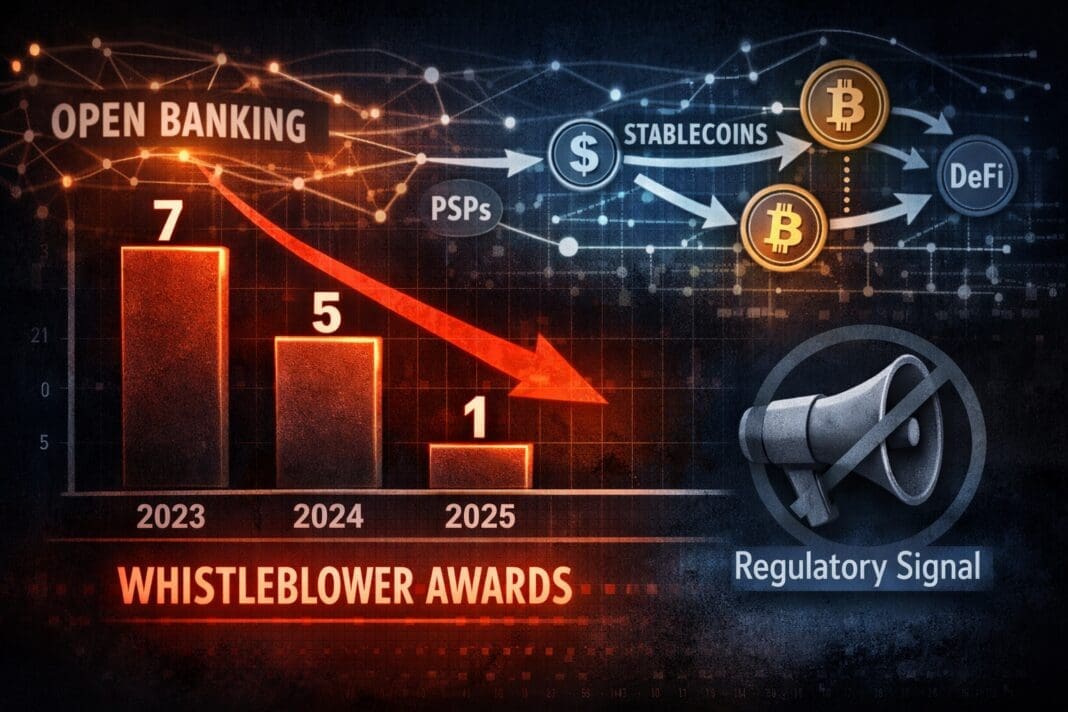

In the age of instant payments, blockchains, and embedded finance, dirty money doesn’t just move—it teleports. While illegal casinos, offshore brokers, and cybercrime rings industrialize their pipelines, regulators are dismantling the only systems that could still stop them. The SEC and CFTC whistleblower collapse is not a technical glitch. It is a global warning.
The New Money Laundering Machine
Today’s financial crime architecture is no longer a suitcase of cash and a friendly bank manager. It is multi-layered payment rails woven from open banking APIs, crypto ramps, stablecoins, prepaid cards, e‑wallets, and embedded finance.
Illegal online casinos and unlicensed trading platforms exploit this mesh ruthlessly. First, a frictionless “instant banking” interface. Behind it:
- payment initiators and AISP/PISP providers,
- high‑risk payment processors,
- on‑ramp crypto brokers,
- stablecoin rails into exchanges and DeFi,
- and finally, offshore wallets and shell entities.
To the consumer, it’s “deposit with bank transfer.” In reality, value is being tokenized, layered, and teleported across borders in seconds—far outside the comfort zone of legacy AML tools.
Open banking consolidates access across all accounts; embedded finance hides financial flows inside non‑financial apps; stablecoins like USDT give criminals dollar‑like liquidity with pseudo‑anonymity and 24/7 mobility. This is not an accident. It is design.
Regulators Asleep at the Switch
Against this backdrop, regulators should be super‑charging transparency and insider reporting. Instead, they are switching the system off.
In 2025, the U.S. SEC—a global benchmark—issued only one whistleblower award press release, after years of regular, headline‑making payouts. Total awards collapsed by more than three-quarters compared to 2024. The CFTC, which just posted record numbers of whistleblower tips, announced only two awards in the same period.
In an era of cross‑chain laundering, AI‑driven fraud, and instant payments, this is regulatory malpractice. Whistleblowers are not a PR accessory; they are the only actors inside illegal brokers, PSPs, exchanges, and casino networks who can explain how the fraud really works.
When the U.S.—still the reference model for enforcement—effectively shuts down its whistleblower axis, it sends one brutal message to bad actors worldwide: now is the time to move money.
Whistleblowers: The Last Line of Defense
No transaction‑monitoring system, no blockchain analytics provider, no “AI fraud engine” can see what insiders see:
- who controls the wallets behind a casino or broker,
- how payment cascades are structured,
- which “regulated” front‑end is quietly feeding crypto wallets in Curaçao or Dubai,
- which compliance officer is instructed to look the other way.
That intelligence does not come from dashboards. It comes from people.
Call to Action: Break the Blackout
FinCrime Observer calls on insiders in:
- banks and PSPs enabling high‑risk merchants,
- crypto exchanges and stablecoin platforms,
- embedded finance providers, neobanks, and open‑banking gateways,
- offshore casinos and online trading schemes
to break the blackout.
If you see laundering, fake KYC, transaction splitting, crypto ramps hidden behind “instant banking,” or internal pressure to ignore risk: document it and report it safely.
Regulators may be failing. Systems may be compromised. But the truth still travels through one channel they cannot fully control: whistleblowers who refuse to be part of the crime.